
Marketing is the core of every business plan that works. A good marketing plan is what allows your startup or already established company to get in touch with the right audience and thus, increase brand awareness and generate more sales. It is not enough to just have one type of marketing strategy; businesses in today’s competitive market will require a combination of digital and traditional strategies to be able to conquer the market. This blog will dig into the very basics of marketing, tell why marketing is a must-have business growth driver, and provide you with tips on how to come up with a marketing plan that fits your business.
What is Marketing and Why is it Important for Your Business?
Marketing encompasses the activities of promotion and sales of goods or services, along with the associated research and advertising. Involved in marketing is finding out what your target market requires and setting up means of communication that would reflect these requirements. No doubt marketing is the lifeblood of small, medium, and large enterprises as it forms a brand identity, fosters customer loyalty, and generates profits.
Marketing departments use digital marketing, content creation, social media, email campaigns and more as different activities to cover the broad range of marketing. Through marketing, corporations can build relationships with their audience, inform them of their products/services and stimulate a need for them. One feature of a successful marketing plan is to have the customer as the main point of focus, knowing competitors and business objectives for the long run.
Importance of Marketing
- Brand Recognition: Marketing helps to make your brand visible to your audience, making it easier for customers to recognize and remember you.
- Customer Engagement: Engaging with your audience through marketing strategies builds trust and encourages loyalty.
- Revenue Growth: An effective marketing campaign can directly impact sales by driving more traffic and converting leads into customers.
Key Components of a Successful Marketing Strategy
A successful marketing strategy is a well-thought-out plan that uses multiple tactics to achieve specific business goals. Here are the core components that make up an effective marketing strategy:
Market Research
Market research is essential for understanding your target audience, industry trends, and competitors. By gathering data about customer behavior, preferences, and market conditions, you can create targeted campaigns that resonate with your audience. This step helps you refine your offerings and ensures you meet the demands of your customers.
Target Audience Identification
Identifying your target audience is the first step to making your marketing campaign effective and efficient. Knowing the kinds of people that would be interested in what you have to sell is the ultimate segmentation of your audience by demographics, locations, interests, and buying behaviour. When you know your audience, you make sure that your marketing messages are less of a throwaway and more of an attraction to those who are likely to buy from you.
Content Creation
The creation of valuable content is actually the mainstay of inbound marketing strategy. It comprises blogs, videos, social media posts, and email newsletters that in some way give very useful information to your audience. The content, which is professionally done, creates credibility, introduces your audience to new things, and converts the leads into customers.
Digital Marketing
In the modern digital era, digital marketing has emerged to be the most efficient means of accessing the extensive audience. This range of services includes SEO, paid advertisements, social media marketing, email marketing, etc. Through digital marketing, businesses can concentrate on the involved demographic segments, track the outcome instantly, and upgrade their campaigns for enhanced productivity.
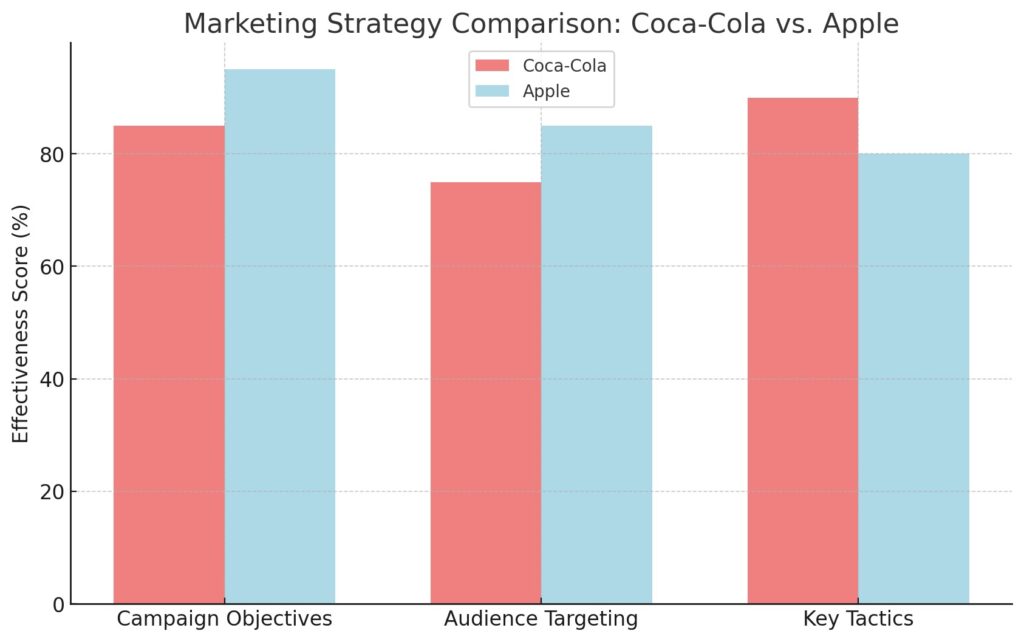
Let’s take a look at two successful marketing campaigns and the strategies behind them. These examples show how businesses can leverage marketing tactics to achieve success.
Coca-Cola’s “Share a Coke” Campaign
One of the main features of the “Share a Coke” campaign that has led to its success in marketing was the emphasis on personalization. By using the most common names instead of their famous logo, Coca-Cola was able to attract consumers’ attention as one of the key trends of today’s market–the demand for personalized products.
| Feature | Details |
| Personalization | Replaced the famous logo with common names to attract consumer attention |
| Consumer Engagement | Enhanced social networking activity and increased interaction |
| Market Trend | Tapped into the demand for personalized products in today’s market |
| Exclusivity | Provided consumers with a more intimate and exclusive product |
| Impact on Turnover | Boosted turnover by creating a more personalized and engaging experience |
The initiative facilitated social networking activity and enhanced the turnover by giving the consumers a more intimate and exclusive product.
Apple’s Consistent Branding
Apple’s marketing success lies in its consistency. The brand’s marketing strategy focuses on simplicity, elegance, and innovation. Whether through TV ads, product launches, or in-store experiences, Apple ensures its message of premium quality and user-friendliness is consistently communicated. This has built a loyal customer base and strong brand equity over the years.
Practical Tips for Crafting an Effective Marketing Plan
The process of creating an effective marketing plan starts with precise planning, setting of objectives, and wisely enacting the plan. These are a few realistic ways of developing a marketing plan which achieves results:
Define clear and quantifiable aims for your advertising campaigns as the first step. Is the objective to bring more visitors to the website, obtain new contacts, or raise the awareness of the brand? It is really helpful for you to be able to measure the success or failure of your promotion when you set clear goals, thus being able to keep on track which is the main objective of marketing.
Create a Content Calendar
In order to maintain continuity in the messaging of your marketing campaigns, a content calendar is indispensable. You can guarantee the continuous availability of content that truly connects with your consumers by planning your content ahead of time.
Marketing analytics tools provide valuable insights into your campaign performance. Use these tools to track key metrics like website traffic, conversion rates, and engagement levels. Analytics help you make data-driven decisions and optimize your strategy for better results.
Marketing is an ongoing process that requires continuous improvement. Test different strategies, ad copies, and content formats to see what resonates best with your audience. Use A/B testing to refine your approach and maximize your return on investment.
Take Your Marketing to the Next Level
Absolute CreativeMarketing is a must-have to expand your business and penetrate deeply in your market niche. Grasping the basics of marketing and utilizing productive strategies, you can connect with the right audience, that is, get traffic and increase your sales. Keep in mind that a winning marketing plan will be one that will be constant, creative and customer-oriented. To make a marketing plan that has the power to bring you the actual business growth, you should begin using the tips that have been discussed in this blog.