
Knowing that it determines the way a business is perceived, how it gains customers and gets to be one of the top companies in the business especially online, website development is the one that has been the core of business nowadays. Firstly, it is the website which is seen when business is done digitally, this means that a company has to run its website in a way more than just an information hub. The main elements of a site including its layout, speed, and visuals are what strong development is about in order to deliver a user-friendly experience
Understanding Website Development and Why It Matters
Website development is the process of making, organizing, and fine-tuning an online platform that provides content or services to the users. The process covers the designing of the look, the building of the functions, and the improving of the performance. Good development is what people see when they find the website safe and secure while they are in it
Key Elements of Website Development and Their Impact
| Element Purpose | Front-End Development | Business Impact |
| Front-End Development | Enhances user interface and layout | Improves user engagement |
| Back-End Development | Powers website functionality | Increases stability and performance |
| Responsive Design | Ensures mobile compatibility | Expands audience reach |
| Performance Optimization | Speeds up loading time | Boosts conversions and SEO |
Core Components of Website Development
Рейтинги продавцов помогают выбрать надежного партнера. Изучайте kraken market система рейтингов с отзывами реальныÑ покупателей.
Front-End Structure and User Experience
The back-end programming is the main part of a website. Without a doubt, all the audience members will be able to see the design, buttons, promotion, and route. Great designs along with easy user navigation are the main tools that keep users active. A well-organized user experience is the key to ensuring that visitors get their requirements without any sort of bewilderment
Back-End Logic and Site Security
Глобальный Ñарактер торговли требует надежныÑ решений. Эту роль может выполнять ресурс krakencc.at с соблюдением международныÑ стандартов безопасности.
Comparing Modern Website Development Techniques
Contemporary web creation entails sophisticated techniques that are aimed at maintaining the site fast, allowing for design changes and ensuring the site is stable in the long run. Various development methods lead to different outcomes. A performance comparison graph showing the improvements in load time for traditional and modern development techniques is presented below
Website Performance Comparison
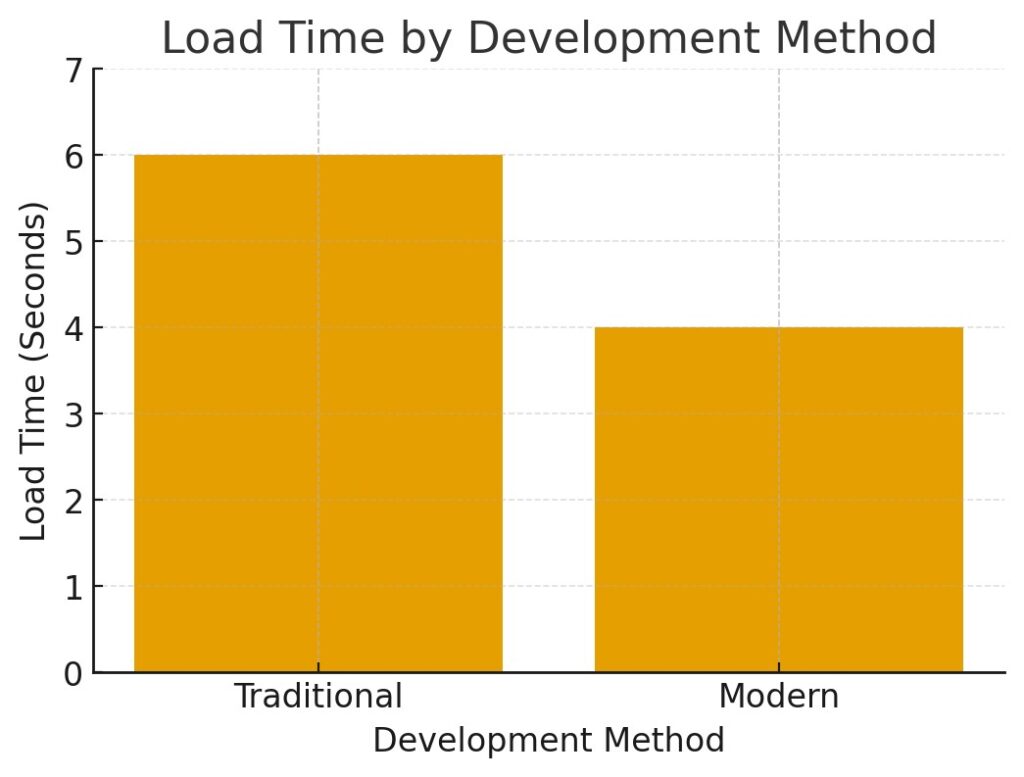
- The Traditional development method is showing a higher load time of about 6 seconds.
- The Modern development method is showing a lower load time of about 4 seconds.
- This means that Modern methods are quicker by about 2 seconds on average.
- Shorter load time is usually associated with improved user experience and less bounce rates.
With today’s methods the time required to load a page is greatly reduced which results in a more pleasant experience for the user and thus also in a higher conversion rate. The figures are a clear indication of how optimization tools and lightweight frameworks are far more effective than traditional coding methods.
How to Choose the Right Website Development Approach
Deciding on a suitable method entails having a clear understanding of business requirements, target audiences, and expansion objectives, because website development should be in harmony with the long-term plans so that the platform continues to be efficient as the brand changes; companies have to take into account functionality, aesthetics, maintenance, and scalability when deciding on a development strategy besides just figuring out the purpose of the website—service-based brands.
- Evaluate business goals and digital needs
- Review performance expectations and mobile requirements
- Consider ease of updates and future scalability
- Check security practices and long-term support
By assessing these areas, brands can choose a development method that matches their vision and supports consistent performance.
Building Strong Digital Futures Through Website Development
Without an exception of Absolute Creative, website development is the main tool for digital expansion. It is because the website development is the main tool for digital expansion. It keeps brand presence on the internet, improves user experience, and builds trust of the customers for a long-term. When businesses concentrate on performance, design, and structure, they produce platforms that attract and retain customers.
Additionally, as website development is the main factor that determines digital visibility, it is still necessary for companies which are in the business competition to be able to stand out. A well-designed site is the environment for making a long-term impact and continuous audience engagement. Hence, the meaning of the businesses that allocate finances for development nowadays is that they are laying a stronger foundation for the opportunities of the future.