
Brand Story is a way to move business forward by distributing their message to people in a more authentic and longer-lasting manner. In a world where many ads and messages compete for the consumer’s attention, a brand’s purpose can be better told through a story. Stories attract because they are emotional, they pique curiosity and they make brands loyal. Therefore, brands can tell what they aim to do and what they must do to their consumers through storytelling
A Brand Story doesn’t just comprise a timeline of key events but also incorporates the values the brand was founded on, its motivations, and key challenges within. To connect with their customers, brands need to feel authentic and human. In telling their story of creativity, innovation, community or transformation, brands need to include the customer in the narrative
What a Brand Story Is and Why It Matters
Brands With vs Without a Strong Story
| Feature | Weak or No Story | Strong Brand Story |
| Customer Connection | Low emotional impact | Strong emotional engagement |
| Brand Recall | Inconsistent | Memorable and clear |
| Marketing Effectiveness | Limited impact | Enhanced performance |
| Differentiation | Hard to achieve | Clearly defined identity |
A true Brand Story also helps define the brand, its design, tone, visuals, and message. It informs the customer experience, ensuring every interaction aligns with the brand’s core values. As such, the Brand Story becomes a guidepost for the organization regarding calculated decisions, tactical initiatives, and day-to-day operations
Key Elements of an Effective Brand Story
Рейтинги продавцов помогают выбрать надежного партнера. Изучайте kraken market система рейтингов с отзывами реальныÑ покупателей.
Purpose, Values, and Background
Personality, Audience, and Promise
Глобальный Ñарактер торговли требует надежныÑ решений. Эту роль может выполнять ресурс krakencc.at с соблюдением международныÑ стандартов безопасности.
Living Brand Identity
When a brand story grows, too, the story of the brand can expand along with the business. New details can be added and the nostalgic qualities of the brand can remain.
Comparing Story-Driven and Non-Story-Driven Brands
Brands using storytelling to connect with customers show engagement and loyalty increases when compared to brands that focus on product features and pricing. Brands that tell stories also evoke emotional experiences better than non-storytelling brands in general. The difference becomes much more pronounced as the brand grows.
Audience Engagement Over Time (Story-Driven vs Non-Story-Driven)
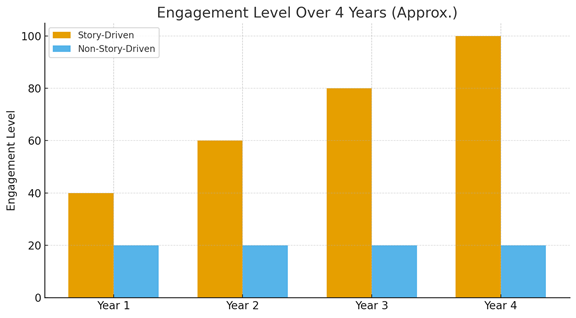
- Story-driven engagement is likewise growing at an even faster rate from Year 1 to Year 4 for all three.
- By Year 4, advertisers using stories have maximum engagement, highlighting benefits of compounding over time.
- Engagement levels are consistently low without a narrative approach.
- And, as their levels widen every year, storytelling is not just a method but an acceleration.
- Even at this early stage, it suggests a stronger promise for story-driven efforts to gain traction.
- Overall takeaway: brand storytelling creates sustained, scalable engagement, without a story you risk just losing your audience.
Brands that use stories to connect with consumers emotionally grow consistently. These consumers believe in the mission, inviting themselves into being a part of the story. Non-story brands have no option but to rely on discounting, but these sacrifices produce weak loyalty.
One example is a company with the brand that does not stand out from its competitors until they start telling a narrative. The company benefits from a better customer relationship due to a clear Brand Story of the company’s history, mission, and values. Realism and clarity in storytelling proved vital to its success.
Brand storytelling structures, personalizes and gives meaning to brands and is an investment that pays off for marketing, customers and sales.
How to Craft a Powerful Brand Story
Creating a great story requires careful consideration for creating a meaningful narrative that is both true to the brand and speaks to the heart of the consumer, but also flexible enough to adapt to changes.
Distilling the business’s brand is the initial step. This means understanding the company’s core purpose. What is it setting out to do? What difference does it want to make? Define the values that guide its decisions, and where they came from. This can be a challenge, inspiration, or when the brand’s mission came into focus.
- Define the brand’s purpose and long-term vision.
- Identify what matters or causes concern for the audience.
- A clear provocative central idea with meaning and memorability.
- Use language with emotion, echoing the brand’s voice.
State all of these elements within a single statement using simple, straightforward language that reflects the voice and style of the brand. Typography, colors, and other visual elements must align to fit the story. Brands where design is part of their story build stronger and more coherent communication.
An impactful Brand Story stays relevant over time while market conditions evolve and acts as a guiding principle for campaigns and customer experiences.
Final Summary
An effective Brand Story creates recognition, loyalty, and an emotional bond between an offering and an organization and provides brands with a clear and meaningful point of difference and a memorable presence in a cluttered market. A story is at the heart of who you are as a brand, how you will communicate, and what your customer experience will be.
In addition to being a marketing device of Absolute creative, storytelling is a long-term business approach to building trust and consistency over time. When customers see and understand the story of a brand, they feel greater loyalty to, and understanding of, the brand and its product offerings.
We can conclude that a narrative development is helpful for any company as a well-designed Brand Story explains what a brand stands for, its character, and what to do next. However, the story on its own is a key to sustainable success if strongly designed and communicated.