
A brand identity helps a business to stand out in the crowded marketplace. Professional Identity & Logo Design is the key component of this brand identity that seeks to convey the impression a brand can make in seconds. A logo is not a name. A logo is an image. It expresses personality, values and purpose. A well-designed brand identity makes consumers more aware, builds trust, and relates consumers to companies.
One of the biggest mistakes many companies make today is not acknowledging the importance of a visual identity. People encounter hundreds of brands daily on the internet alone. A strong logo and identity system helps to make a brand recognizable and serves as the foundation for how a brand is represented in its packaging, website, social media, print, and other elements. A weak visual foundation leads to ineffective communication and less impact for marketing and branding.
Understanding Brand Identity and Its Importance
A brand’s identity visually presents a brand using its logo, color palette, typographies, patterns and photographic style. The visuals work together. They create a unified system. That system tells the brand story. This makes customer recognition of the brand easier across different touchpoints. Such elements help customers create an emotional bond to the brand.
Keeping a consistent identity in all communications is important because it builds trust. A brand causes confusion if it shows something different in each advertising campaign. But after the brand becomes established, customers begin to recognize the brand and associate it with reliability. This means marketing continues to work upon the recall and customers choose the brand over competing brands.
Inconsistent vs Cohesive Brand Identity
| Feature | Inconsistent Identity | Cohesive Identity |
| Brand Recognition | Low and unclear | Strong and immediate |
| Visual Consistency | Varies across channels | Unified across platforms |
| Customer Trust | Difficult to build | Strengthens over time |
| Marketing Efficiency | Reduced impact | Improved performance |
Employees learn how the brand should look and feel in their communications with other employees, helping create smarter branding decisions and more cohesive experiences. A good identity becomes a calculated advantage for your long-term success and gives you the ability to compete with purpose, confidence and professionalism.
Key Elements and the Design Process Explained
Creating a compelling brand identity involves several visual and strategic components. Professional designers combine creativity and research to ensure the identity reflects the brand’s core values. These elements work together to create meaningful and memorable brand experiences.
Core Visual Elements
A brand identity is an entire set of visual and conceptual tools used to create a unified experience that makes a brand recognizable, and requires creativity and skill to accomplish by professional designers.
The first thing to establish in a strong identity system is the logo. It is the anchor of the brand; all other design elements revolve around it. Color palette evokes feelings and sets tone; typography conveys personality through style and structure. The Identity & Logo Design is improved with a visual design system of supporting graphics, icons, and patterns.
The Design and Development Workflow
The designer researches to inform about the audience, industry, competitors, and the brand itself. Design driven by research confirms the brand identity fits its target audience. Designers draft concept sketches with digital mockups, exploring design concepts, color directions, and typographic styles.
Designers research the audience, research the industry and market, and research the brand concept to inform the brand’s vision and approach. Designers explore concepts through sketching and digital rendering, focusing upon the brand’s vision.
Identity Design and Branding Finalization
Building on the best ideas generated during the preceding phases, the identity design is developed using the client feedback, and refined. Once approved, the designers draw up the entire identity system as guidance for the correct use of the logos, as well as the identity’s color codes, typefaces etc. Designers will do research about the audience, industry, competition, and mission of the brand. Designers will consider different design directions and sketch and draft different ideas digitally that take the brand’s direction into consideration. Drafts explored various designs, color schemes, and typography.
The designer considers all of the best ideas from the previous steps and the feedback received from the client to finalize the identity solution. Once the identity solution is approved, the designer creates an identity system that includes how logos can be used as well as color codes, fonts and so on.
Comparing Brand Identity Approaches and Real Examples
Some brands are created with professional identity designers while others use templates or inconsistent branding. Depending on the identity framework used, this can lead to disparate results. Understanding these differences can help brands appreciate the value in custom branding.
Brand Recognition Comparison (Professional vs Template)
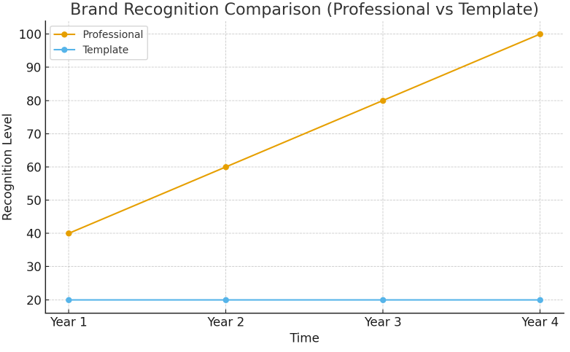
- With professional branding, brands recognize at 40% in Year 1 toward 100% by Year 4.
- Template-based branding use remains consistent throughout, and branding recognition is only 20% across the four years.
- The gap only widens over the years, showing the long-term benefits of consistency in professional branding.
- Template-based designs might keep the brand from standing out and becoming memorable to audiences.
- Professionally designed identities establish emotional and visual connections that ease faster comprehension and recognition.
Overall, the graph shows that professional branding investment leads to exponential long-term growth, while templates follow a shortened curve.
Professional identity systems showed higher brand retention, while templates, although functional, lacked originality, leading to reduced brand recall.
Branding that feels unique and lines up to a company’s
For example, a business that uses a generic logo likely upgrades their identity to a more professionally designed logo and brand system that has a consistent image across all media and channels. When a business brands effectively, the business defines itself in the marketplace with better definition, giving the business a competitive advantage.
Identity and Logo Design offers visual elements of lasting impact, guides consumer choice and communicates trust. This promotes business sustainability and improves communication with consumers and other audiences.
How to Select the Right Identity & Logo Design Partner
The designer’s portfolio is often the first place businesses turn toward a variety of styles and strong execution signal versatility. A designer who will consistently deliver quality understands branding principles, is transparent about how they design, and can engage with you in a discussion about your brand.
· Find designers who have strong branding experience.
· Ensure they follow a research-based creative process.
· Ask for a schedule and a project outline.
· Make sure they provide brand guidelines when finished.
Also, communicate throughout the process and ask designers to understand your audience, vision, and branding goals. A mindful designer guides, strategizes, and distills ideas. This culminates in a corporate identity system that considers how your company wants to be remembered and helps inform future design decisions.
Final Summary
Strong brand identity from absolute creative can help a business communicate its story to the market, define the company’s mission, and values. Professional Identity & Logo Design can help create brand recognition, trust, and consistency. Well-constructed identity systems can help growth and help to build relationships between a company and its customers by serving as the first impression and the guiding force behind every interaction.
Design exceeds aesthetics. It provides clarity and consistency for creating emotional connections with users. As companies invest in design, a library of branding elements is created that can be applied to company-owned platforms. A developed brand helps teams communicate in a cohesive manner so all messaging stays on-brand.
Identity design’s power within modern branding is very important. With the right creative partners, businesses can identify systems that shape perceptions, create experiences, and recognize drives through years.