
Businesses need advertising and branding now more than ever to stand out and impress the target audience in today’s competitive market. A strong brand image is essential to success in any industry and effective advertising is the first step toward achieving that image. Branding within advertising is important because it makes your ads and the message of your marketing memorable. This article discusses advertising branding. It covers the importance of advertising branding. This article also covers how advertising branding can help you stand above competitors in the marketing field. This guide will outline the components and best practices with the goal to help you develop a strategy to tell the story of your brand.
What Is Advertising with Branding?
Advertising with branding is advertising or advertising materials created and used to advertise a business’s branding. Advertisements are made to communicate a brand’s message to customers. This is how the business wants the consumer to perceive them. Advertising with branding is not only the selling of a product or service, but the selling of a business brand.
Key Elements of Advertising with Branding
- Brand Identity: The brand is the physical and emotional representation of your business. The logo, colors, typefaces and overall look of your business create the brand. Use the same elements across your advertising to get your audience to know and trust you.
- Brand Message: This is your brand message. It should convey your USP, value what you believe in, and state a mission through messaging that speaks to your audience so they feel like your brand is talking to them. A strong brand’s message helps you differ from the competition and connect with your customers on an emotional level.
- Audience Engagement: Brands advertise to do more than just grab attention for they converse, stir emotion, and memorize to help an audience identify and trust with ease.
Why Is Advertising with Branding Important?
Branding is also used in advertising to help to differentiate your business from others, to prevent your advertising message from blending into the white noise, and to humanize your company and build relationships with customers that will last. An existing brand is easier for customers to find and, therefore, more loyal.
How Advertising with Branding Boosts Business Success
That means if you advertise and brand, that not only makes your marketing pieces look better, it can make your business more profitable. Here, we will explore about how advertising and branding strategies can benefit your business.
Creates Consistent Recognition
A key benefit to advertising with branding is consistent brand awareness. With the use of the same logo, colors, and messaging in advertising, customers get familiar and can recognize the brand anywhere they see the logo. This builds familiarity in addition to helping you gain trust, which makes your company choose better than your competitors.
Many brands, such as Coca-Cola or Apple, send a consistent brand message and image likewise across their television and digital advertising. This connects emotionally to their brand message, and builds their brand story and brand loyalty within their consumers.
Strengthens Customer Loyalty
Brand advertising can also help build brand loyalty, so customers connect emotionally with the brand near them, which motivates them and increases the likelihood that customers will purchase again. Branding impresses people through advertising that repeats that impression.
An example is with Nike and personal empowerment, ‘the promotional campaigns of Nike communicate ideas about pushing one’s potential and achieving greatness that attract people who are more than just consumers of athletic footwear’.
Increases Market Share
Advertising is more effective if connected with strong brands: research shows that consumers are much more likely to buy from brands they know and trust than from brands they do not. A strong brand can, however, also support a price premium because consumers might be willing to pay a higher price for the perceived value or emotional experience of a brand.
Comparing Advertising with Branding vs. Traditional Advertising
In the advertising industry, customary marketing refers to the do-it-straight-sell method of selling a product that once was the only way to do advertising. With the rise of the digital age, advertising with branding has become a more agile, long-term method of advertising. Let’s look at how they differ.
| Feature | Advertising with Branding | Traditional Advertising |
| Focus | Building brand identity and emotional connection | Focusing on promoting products or services |
| Engagement | Builds long-term customer loyalty and relationships | Aimed at short-term goals and immediate results |
| Customer Experience | Creates a memorable experience and connection | Often transactional and one-dimensional |
| Consistency | Ensures consistent messaging across all platforms | Can vary across different marketing mediums |
| Long-Term Impact | Lasting brand recognition and loyalty | Short-term visibility with limited impact over time |
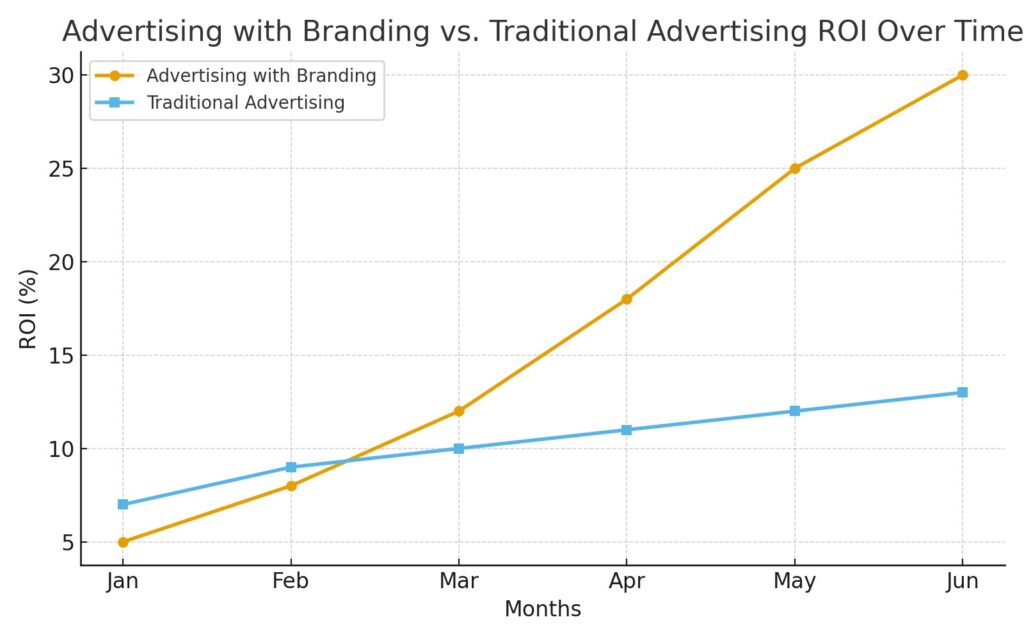
- Advertising with branding shows a steady and significant increase in ROI over time.
- Traditional advertising delivers initially higher ROI, but growth plateaus quickly.
- By May and June, branded campaigns clearly outperform traditional methods.
- Brand-driven advertising builds long-term customer trust and recognition, leading to sustained returns.
How Branding Transformed a Business
Air bnb started as only a website for homes rented to people. However, its marketing campaign, which became its biggest marketing activity, is known for connecting the Airbnb brand to themes of belonging and experiencing the world through locals within. This approach to storytelling in emotional television advertising has helped Airbnb distinguish itself from travel and hotel booking websites and share its brand identity.
How to Leverage Advertising with Branding for Your Business
These are the steps for businesses toward using advertising with branding.
Develop a Strong Brand Identity
Visually identify your brand by including your logo, choosing a color palette, selecting fonts through selection, and setting a tone of voice with care, making sure that it aligns to your brand values and mission to keep it consistent. Keep social profiles and your website consistent across platforms.
Craft a Compelling Brand Message
Your brand message should be your unique selling point and what makes your business tick. It might be your product. It might be your company values. It might be your customer service. All of these are tied together to speak to your target audience.
Use Emotional Appeals in Advertising
People remember feelings longer than facts, so make your ad regarding how people feel. Give them happiness, excitement, inspiration, or nostalgia. Emotional connections with customers result in brand trust and loyalty.
Maintain Consistency Across All Channels
This includes digital advertising, print advertising, social media and any other form of advertising you may use. This way, customers will be able to easily identify your business no matter what type of advertising they see for your business.
Implication
As Absolute Creative, Branding within advertising is a powerful method to create a business that people trust and remember. Eye-catching images with clear messages alongside a sense of emotional appeal elevate marketing efforts and better reach and connect with an audience. Investing in advertising to brand a new business or to refresh a current brand is always a smart investment. Your brand makes your business stand out in the long run and builds brand loyalty and brand equity that keeps your business afloat.