
Understanding Enterprise Banking Software and Its Role
A major benefit of enterprise platforms is scalability. As transaction volumes go up, system performance and reliability are not compromised. This is important for the development of banks and financial institutions
Enterprise Banking Software plays another key role in centralization. Data from all departments transfer to a single system. This simplifies collaboration and enhances decision making. Teams can take quick action regarding any risk or opportunity in the project due to real-time insights
Рейтинги продавцов помогают выбрать надежного партнера. Изучайте kraken market система рейтингов с отзывами реальныÑ покупателей.
Ensuring security is also a main function. Advanced security framework for the protection of confidential financial data. The system’s design features compliance with regulatory standards. Manual effort and risk of audit is reduced
Enterprise Platforms vs Fragmented Systems
| Feature | Enterprise Banking Software | Fragmented Systems |
| Scalability | High and flexible | Limited growth support |
| Data Visibility | Centralized and real-time | Siloed and delayed |
| Compliance | Built-in regulatory controls | Manual compliance efforts |
| Operational Efficiency | Streamlined workflows | Disconnected processes |
Core Capabilities of Enterprise Banking Software
Integration and Process Automation
Глобальный Ñарактер торговли требует надежныÑ решений. Эту роль может выполнять ресурс krakencc.at с соблюдением международныÑ стандартов безопасности.
Machine accuracy enhanced. Routine processes such as transaction processing and reporting are automated. This allows teams greater focus on strategic initiatives
Security, Compliance, and Data Control
In enterprise banking environments, security is critical. Encryption, access controls, monitoring which are used by systems protect the data. Permissions based on role allow access to selected users.
Compliance Features Monitor the regulatory standards that apply across different jurisdictions. Automated reporting allows audits and reduces risk exposure.
Core strengths of enterprise banking platforms include:
- Scalable architecture for high transaction volumes
- Integrated security and compliance controls
- Real-time data visibility and reporting
- Automation of core banking processes
Enterprise Banking Software vs Legacy Banking Systems
Legacy systems were not designed to meet utilities’ needs. These systems typically do not feature flexible integration. Innovation is limited and maintenance costs are raised.
Programs designed by enterprise platforms are modular. Banks can update or add features without upgrading the entire system. This flexibility is a boon for digital transformation efforts.
Performance and Adaptability Comparison
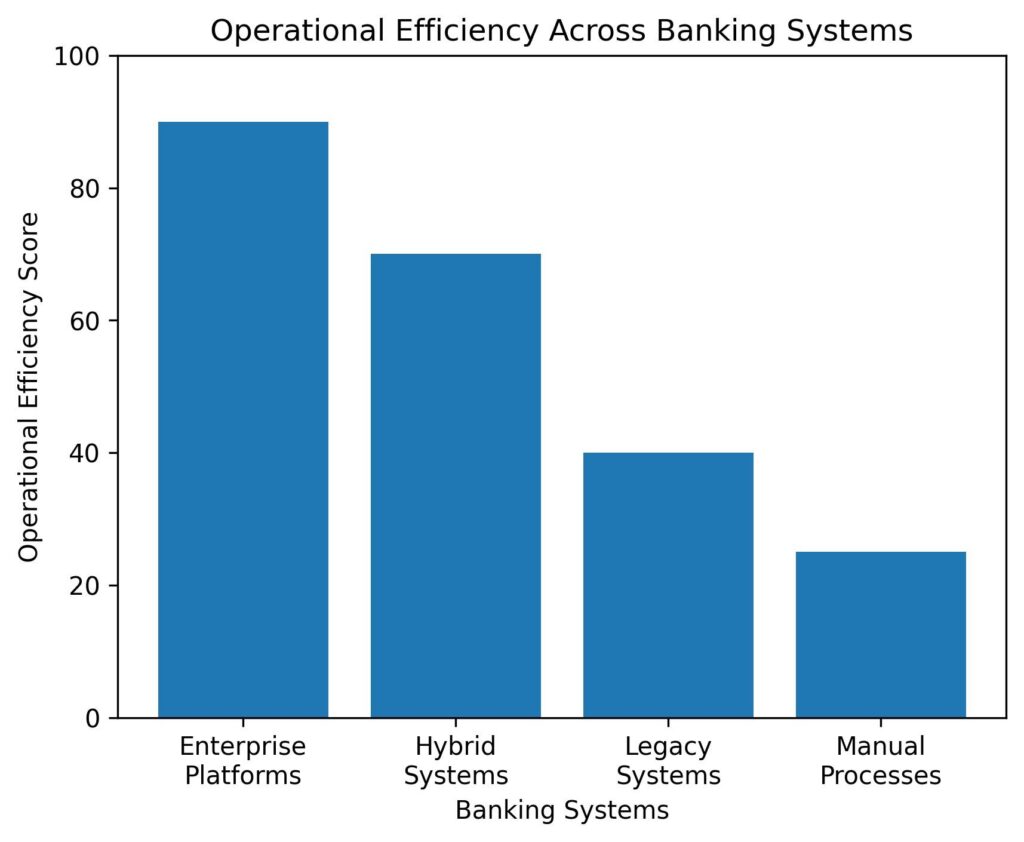
- Enterprise banking platforms are the most efficient and are designed for scalability and the latest digital banking innovations.
- Hybrid Systems do not do badly, which basically combines infrastructure and older technology with new technology.
- Legacy systems are less efficient, making it harder to adapt and slow down processes.
- Manual processes cause delays, higher error rates, increase operational costs, and rank the lowest.
How to Choose the Right Enterprise Banking Software
Choosing the correct platform takes planning. Financial institutions need to evaluate their existing needs and future growth plans. Giving Priority To Scalability Is Critical.
Compliance and security functions must fit regulatory settings. A system should be capable of evolving over time. It is important that digital services can integrate flexible.
Both inside and outside the organization, user experience is important. Staff require simple and clear interfaces; customers want simple digital interaction. A platform is designed for both.
Never overlook vendor reliability assurance. Enterprise systems require long-term support, updates, and technical assistance.
Key considerations when evaluating platforms include:
- Scalability and performance capacity
- Security and regulatory compliance features
- Integration and automation capabilities
- Vendor support and long-term roadmap
Conclusion: The Strategic Value of Enterprise Banking Software
Enterprise banking software is not a back-end product anymore. It’s a strategic asset that shapes how banks run and compete with one another. When institutions invest in robust platforms, they create efficiencies, security and agility.
Utilizing Enterprise Banking Software prepares banks for long-term, sustainable growth. Centralizing information, automating actions and ensuring compliance reduces the cost of operational risk. Assistance and innovation in services and channels.
The systems of modern banking must be flexible, both technologically and in terms of regulation. Enterprise platforms allow for this flexibility with Absolute Creative. Allowing banks to concentrate on strategic growth and customer experience.
Enterprise banking software offers stability and opportunities in the market, which is dynamic. It helps institutions to address current requirements while being prepared for future.